
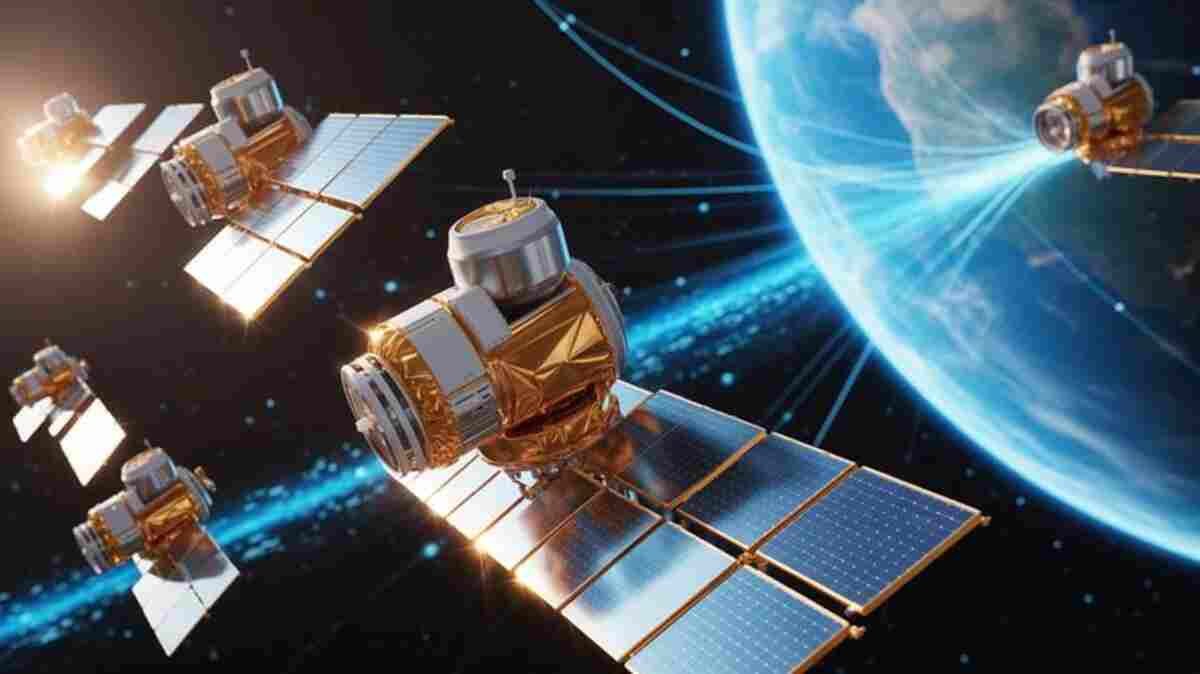
Google is launching AI computing into space. The company has revealed that its first test satellite as part of Project Suncatcher will be released on 1 October aboard a Falcon 9 from SpaceX the satellite is on board a Transporter-18 rideshare launch from Vandenberg Space Force Base, California. A pioneering concept of a solar-powered data centre orbiting the planet.
The satellite, just MVP, sits in size about a refrigerator. It was designed jointly with Planet Labs. It contains four custom-designed Google Tensor Processing Units the special chips that constitute most of Google own AI computation on the ground. It has solar panels expected to provide the power of a household electrical device less than one kilowatt at one thousand wattsthat’s quite feeble compared to the power of the Data Center. The purpose is not to train huge models from space; it’s to study how hardware will behave in a spaceflight context.
The launch itself is the first obstacle. These TPUs will have to endure fierce vibration, the chips will have to bear forces of between 50 and 100g. Google has already thoroughly tested the chips on earth including radiation tests, which were more significant than they will experience on a five year mission. Early results were promising but there is no substitute for the real thing.
Once in orbit thermal management takes over as the limiting factor. With no atmosphere to cool off in, heat must travel through dedicated materials and radiators that transfer it away into the vacuum of space. Under the current model, each TPU will only be able to run for a 15 minute span at a time before giving the machine a break so that the radiators can activate. During this brief period the satellite will be able to run Google’s Gemini models and answer basic questions from this Ai. The deployment will roughly track data for a year, although its time in space could be much longer until the satellite re-enters the earth’s atmosphere.
Project Suncatcher is part of a larger effort to seek out fresh sources of energy for AI computing to meet expanding demand. Earthbound data centers draw huge quantities of power and water, and the search for sufficient green power and adequate locations has grown ever more complex. Space offers nearperpetual sunshine in some orbits, and the lack of physical limits feels compelling. Google is not the only one talking about orbital computer clusters. You can find bits and bobs from other tech firms discussing satellite AI processors, but we are the first large tech company to deploy our own AI chips in orbit and conduct testing.
The company is not rushing to portray the effort in the best possible light, and is not advertising a commercial system: it wisely emphasizes that the next milestones are two research satellites, launched in 2027, that will demonstrate high speed laser links, and takes dedicated launches if larger constellations are to be developed.